


 Lucy Flynn, BABYGO® team
It starts as an ache in one buttock. Then one morning you stand up from the sofa and there's a hot line down the back of your leg and your foot has gone fizzy. Twenty-eight weeks, and walking to the car is suddenly a negotiation.
That's what sciatica feels like, and pregnancy is good at bringing it on. Here's what's happening, what the NHS says helps, where a belt or a ball honestly fits, and the short list of symptoms that mean a phone call today rather than a heat pack.
Quick answer: Sciatica is the sciatic nerve being squashed or irritated, and in pregnancy softer ligaments, extra weight and a shifting pelvis all lean on it. The NHS says keep moving, avoid long stretches sitting or lying down, use heat, and see a GP if it isn't easing after a few weeks. A belt takes some weight off while you're upright. A ball is a seat that isn't the sofa.
Key facts
- The sciatic nerve runs from your lower back to your feet. The NHS describes sciatica as a sharp, burning pain down the back of the leg, with tingling, numbness or weakness, and says it usually gets better in a few weeks to a few months.
- The NHS's advice is to carry on with normal activities as much as you can and not to sit or lie down for long periods: moving might hurt, but it isn't harmful and can help you get better faster.
- In pregnancy, the NHS says paracetamol is usually the best painkiller to use. Ask a pharmacist or your midwife before anything else.
- The NHS lists pelvic support belts among the equipment a physiotherapist may suggest for pelvic girdle pain, which affects up to 1 in 5 pregnant women. Sciatica is on the list of things our belt is designed for.
- Numbness around your bottom or genitals, trouble peeing or controlling your bladder or bowels, or weakness in both legs: the NHS says 999 or A&E, not wait and see.
What causes sciatica in pregnancy?
Sciatica is the sciatic nerve, which runs from your lower back down each leg to the foot, being irritated or squashed. Outside pregnancy that's often a disc. In pregnancy it's usually the whole set up changing around the nerve.
The NHS back pain page explains the start of it: your ligaments soften and stretch to get you ready for labour, which strains the joints of your lower back and pelvis. Add a bump that pulls you forward and a baby whose weight sits over the pelvis, and the muscles in the buttock tighten to compensate. Over the nerve, that's sciatica.
It usually picks one side. Pain over the pubic bone, across both sides of the lower back or down both thighs is more likely pelvic girdle pain, a different thing with a different fix, covered in our pelvic girdle pain post.
What does sciatica feel like in pregnancy?
The NHS's description is the one to go by: a sharp, burning pain down the back of the leg, tingling like pins and needles, numbness, or weakness. People describe it starting in one buttock and shooting down the thigh, sometimes to the foot, worse when you stand up, walk or sit too long.
It gets confused with two other things, so here's the difference.
| What it is | Where it hurts | What makes it worse |
|---|---|---|
| Sciatica | One buttock and down the back of that leg, sometimes to the foot; pins and needles or numbness | Sitting or lying for a long time, standing up from a chair, long walks |
| Pelvic girdle pain (PGP) | Over the pubic bone, across the lower back on one or both sides, sometimes the thighs and perineum | Stairs, standing on one leg, turning over in bed, getting out of the car |
| Ordinary pregnancy back ache | A dull ache across the lower back | Time on your feet, lifting, the end of the day |
If it's PGP, tell your midwife and ask about physio, which the NHS says is the treatment. If it's the ache, the lower back pain post has the everyday fixes. If it's the leg, keep reading.

What helps sciatica pain during pregnancy?
Nine things, most of them from the NHS sciatica page and its back pain in pregnancy page, with the two bits of kit we make where they honestly help.
- Keep moving. The NHS's first instruction: carry on with your normal activities as much as possible, and start gentle exercise as soon as you can. It hurts, but it isn't harmful and it helps you get better faster.
- Don't sit or lie down for long periods. The same page is blunt about this. Get up every half hour, walk to the kettle, change position.
- Heat. A heat pack or a hot water bottle on the buttock and lower back, or a warm bath, which is on the NHS's back pain list too.
- Walk, swim or get in the pool. The NHS's exercise in pregnancy page says 30 minutes of walking a day can be enough, and lists swimming and aquanatal classes among the good options. Water takes the weight off everything.
- Sleep on your side with a pillow between your knees. The NHS says your side is the safest way to fall asleep from 28 weeks, with a pillow between the knees and one under the bump. The top knee up stops the top leg dropping forward and twisting your pelvis; a long pregnancy pillow does both jobs at once.
- Lift and turn properly. Bend your knees and keep your back straight, move your feet when you turn rather than twisting, flat shoes, and split the shopping between two bags. All from the NHS back pain page.
- Paracetamol, if you need it. The NHS says it's usually the best painkiller to use in pregnancy. Ask a pharmacist or your midwife about anything else before you take it.
- A support belt for the hours on your feet. Under the bump, two or three hours at a time, off when you sit. It takes some of the bump's weight off the pelvis and lower back, which is where the pressure on the nerve starts. More below.
- Ask for physio. Your midwife can refer you. The NHS says see a GP if sciatica hasn't improved after a few weeks of home treatment, is getting worse, or is stopping you doing normal things. Don't put up with it for a whole trimester.
Sore now and wondering what's next? Tell us your due date and we'll send what to expect, what to do and what to sort each week, including what's worth mentioning to your midwife. 10% off when you're ready.
Does a support belt or a birthing ball help sciatica in pregnancy?
The old version of this page called the ball "the best treatment". Honest version: nothing we sell treats sciatica. A belt and a ball each change one thing that's making it worse, and for a lot of people that's the difference between getting through the day and not.
Neither one is a cure, and both are worth having around.
The belt. Our pregnancy support belt goes under the bump and lifts it, so the pelvis and lower back carry less of the weight. Sciatica is on the list of what it's designed for, with pelvic girdle pain and round ligament pain, and our own product page says many people find it helps and that it isn't a cure.
Wear it for the standing and walking hours, snug not tight, and take it off if anything goes numb. Sizing and fitting are in the support belt post.

BABYGO® Pregnancy Support Belt
Under the bump, for the hours you're on your feet. Designed for sciatica, pelvic girdle pain and lower back pain, with the velcro guaranteed for a year. Sizes S to XXL by your pre-pregnancy dress size.
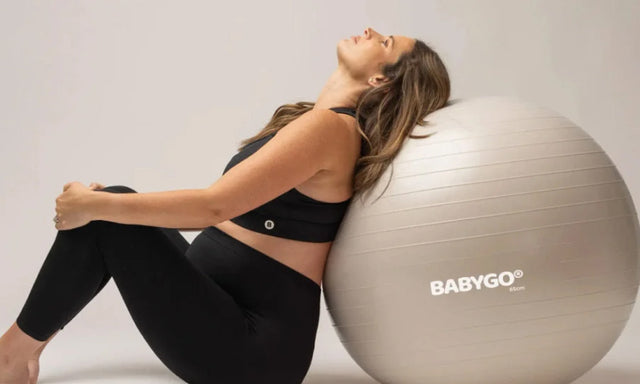
The ball. The NHS's rule for sciatica is not to sit or lie for long, and a birthing ball is a seat that makes that easy: you can't slump on it, and small sways and hip circles keep the pelvis moving while you're sat down. Kneeling and leaning forward over it takes the weight off the lower back altogether.
The seated moves are in our pregnancy ball exercises post. If a move sends the pain further down the leg, that's your answer: sway instead.


BABYGO® Birthing Ball
A seat you can't slump on, for sitting tall, swaying and leaning forward. Anti-burst, tested to 1000kg, in 65cm and 75cm, with a pump and our 100 page pregnancy book in the box.
When to get help for sciatica in pregnancy
See a GP, the NHS says, if the pain hasn't improved after trying home treatments for a few weeks, is getting worse, or is stopping you doing your normal activities. In pregnancy that conversation can start with your midwife, who can refer you to a physio.
Call 999 or go to A&E if you have sciatica on both sides, weakness or numbness in both legs that's severe or getting worse, numbness around or under your genitals or around your bottom, trouble starting to pee or controlling when you pee, or you don't notice when you need to poo. That's the NHS's list, and none of it waits.
And because back pain in pregnancy has its own list: the NHS says contact your midwife or GP urgently if back pain comes with a fever, bleeding or pain when you pee, or pain in your sides, or if it starts in the second or third trimester, because it can be a sign of early labour.
Questions we get asked
Does sciatica go away after pregnancy?
For a lot of people it eases once the bump has gone, but nobody can promise that. The NHS's general line is that sciatica gets better in a few weeks to a few months and can last longer. If it's still there after the birth, tell your GP or health visitor.
Can I take painkillers for sciatica while pregnant?
Paracetamol is usually the best painkiller to use in pregnancy, according to the NHS. For anything else, including ibuprofen and gels, ask a pharmacist or your midwife first.
Is sciatica the same as pelvic girdle pain?
No. Sciatica is nerve pain down one leg. Pelvic girdle pain is joint pain in the pelvis itself: over the pubic bone, across the lower back, sometimes into the thighs, worse on stairs and turning in bed. The table above splits them, and PGP has its own post.
Which side should I sleep on with sciatica in pregnancy?
Either side, the NHS says, from 28 weeks, with a pillow between your knees. Most people end up on the side that doesn't hurt, sore leg on top and supported.
Can I still exercise with sciatica in pregnancy?
Yes, and the NHS would rather you did. Walking, swimming and aquanatal are on its list, and the seated ball moves suit most people. Stop anything that sends the pain further down the leg.
The bump support collection has the belt and the band, the birthing ball collection has the ball, and the size guide takes a minute before you order.
This is general guidance from the BABYGO® team, not medical advice. Your midwife or GP knows your pregnancy; ask them if anything here doesn't fit your situation.


